
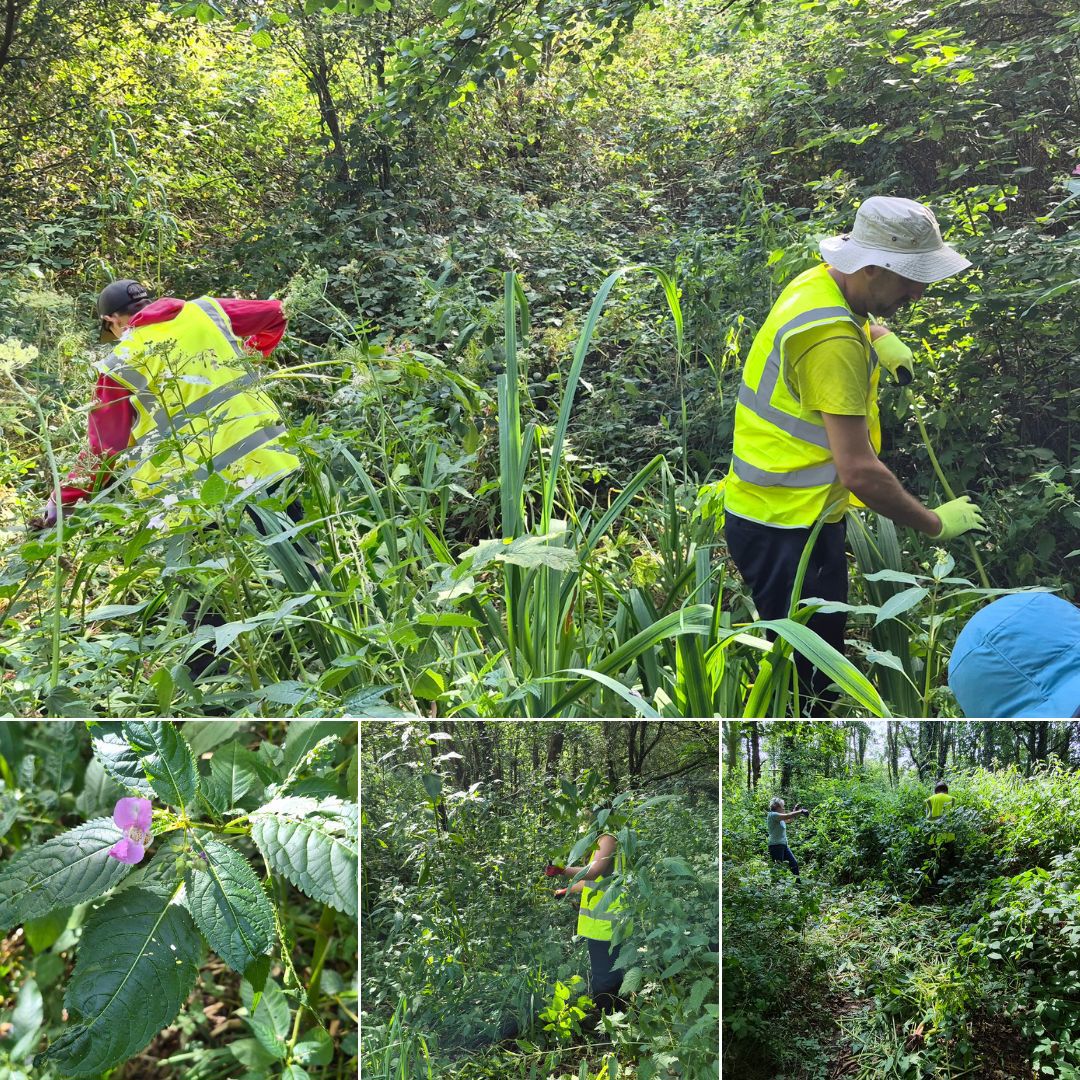
Residents are being encouraged to adopt a patch of land to help monitor and manage Himalayan balsam.
Building on the success of last year's Big Balsam Bash, organisers are encouraging residents to get involved in efforts to tackle one of the UK's most problematic invasive plant species.
The campaign is led by the Blaenau Gwent and Torfaen Local Nature Partnership and aims to protect local habitats, waterways and wildlife from one of the UK's most problematic invasive plant species.
Councillor Mandy Owen, Executive Member for the Environment, said: "Adopting a patch of land to monitor Himalayan balsam is a fantastic example of The Torfaen Deal in action, with residents, community groups and local organisations coming together to tackle a shared challenge.
"Now that we're nearing the end of the balsam-pulling season, adopting a patch will help us build a clearer picture of affected areas. This will give us a head start next year, allowing us to prioritise sites for invasive species removal and habitat restoration, helping native wildflowers and wildlife to thrive.
"Whether you can spare a few hours or get involved regularly, every contribution helps us create a greener, healthier Torfaen for future generations."
Residents can now use the interactive map on the council’s Get Involved website to report sightings, find local volunteer events and "adopt a patch" of Himalayan balsam near their home or community.
Many balsam plants are now approaching the end of their growing season and will be going to seed very soon. Once seed pods have formed, patches should not be disturbed, as this can cause seeds to spread further and create new infestations.
However, residents can still adopt a patch and add it to the interactive map, helping to build a clearer picture of affected areas so action can be taken early next year when new plants begin to emerge.
By taking ownership of a local site, volunteers can help identify and monitor the fast-spreading plant and support future efforts to remove it before it has a chance to spread further.
Himalayan balsam was first introduced to the UK in 1839 and can grow up to 10ft in a single season, with each plant capable of producing up to 2,500 seeds. The species spreads rapidly along rivers, streams and woodland edges, crowding out native plants and reducing biodiversity.
When the plant dies back in winter, it leaves riverbanks vulnerable to erosion and can contribute to increased flood risk.
No previous experience is needed to get involved. Volunteers can commit anything from a few hours to several days and will receive guidance on identifying and safely removing the plant, while learning practical conservation skills.
Residents interested in taking part can complete the volunteer sign-up form and explore the interactive map at: https://getinvolved.torfaen.gov.uk/big-balsam-bash (opens in new tab)
For more information, including volunteer opportunities and upcoming balsam-pulling events, visit the Big Balsam Bash (opens in new tab) webpage.